
“He was a great icon of the cycling world… Don’t bring up the past, let him rest in peace”

The cycling world has been thrown into renewed turmoil after old doping allegations surrounding Marco Pantani, the legendary Italian rider known as “Il Pirata,” were unexpectedly revived in international media. The resurgence of these accusations, decades after his tragic death, has sparked outrage, grief, and a fierce debate about memory, respect, and justice in professional sport. Amid the storm, a powerful and unexpected voice rose in defense of Pantani, sending shockwaves across the cycling community and far beyond it.

That voice belonged to the 2023 Tour de France Femmes champion Demi Vollering. The Dutch star, rarely outspoken on historical controversies, stunned fans and commentators alike by speaking publicly in defense of Pantani, urging the media and the cycling world to stop reopening wounds that can never truly heal. “He was a great icon of the cycling world,” she said. “Don’t bring up the past anymore. Let him rest in peace.”
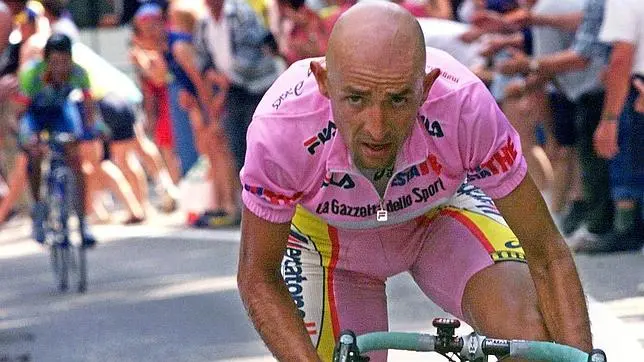
Pantani remains one of the most enigmatic and emotionally charged figures in cycling history. The only rider to win both the Giro d’Italia and the Tour de France in the same year in the modern era, he captivated millions with his explosive climbing, rebellious spirit, and unmistakable bandana. Yet his brilliance was shadowed by controversy, suspicion, and relentless pressure. His career collapsed after repeated doping accusations, and in 2004, Pantani was found dead in a hotel room in Rimini at just 34 years old.
Officially ruled an accidental death linked to substance abuse, the circumstances surrounding Pantani’s passing have long fueled speculation. In recent weeks, international media outlets have revived old allegations and documents, claiming to reveal “new truths” about the forces that destroyed him. These reports have reignited painful questions about doping, corruption, and whether Pantani was pushed to the edge by a system that first celebrated him and then abandoned him.
For many fans, especially in Italy, the renewed focus has felt like a cruel reopening of an unhealed wound. Murals, memorial rides, and annual tributes continue to honor Pantani not just as a cyclist, but as a symbol of passion and suffering in a brutal era of the sport. Vollering’s intervention tapped directly into that emotion.
“What shocked me most,” Vollering said, “is how easily we forget that he was a human being before he was a headline. He cannot defend himself anymore. Digging into his past again doesn’t bring justice, it only brings more pain.”
Her words resonated instantly. Social media flooded with messages praising her courage and empathy, while former riders, journalists, and fans echoed her sentiment. Many argued that while cycling must confront its history honestly, there is a difference between accountability and exploitation.
The renewed media focus has also revived discussion about the truth behind Pantani’s death. Over the years, investigations and testimonies have suggested that his final years were marked by isolation, depression, and a sense of persecution. Some believe he was unfairly targeted, others insist he was a product of a deeply flawed system that normalized excess and secrecy. What remains undeniable is that Pantani’s fall was as dramatic as his rise.
Italian commentators reacted strongly to Vollering’s defense, calling it “a rare act of respect from a new generation.” In a sport often divided by eras and scandals, her words bridged a painful gap between past and present. “Pantani inspired us to love cycling,” one former Italian rider said. “He paid the highest price. That should mean something.”
The debate has also raised uncomfortable questions about why Pantani’s name continues to be revisited while other figures are quietly left in the past. Critics of the recent reports accuse the media of chasing sensationalism rather than understanding, turning tragedy into content.
For Vollering, the issue goes beyond Pantani alone. She emphasized the responsibility of today’s cycling world to learn without dehumanizing. “We should protect riders, not destroy them,” she said. “History should teach us compassion, not cruelty.”
As the controversy continues to ripple through the sport, one thing is clear: Marco Pantani’s legacy remains powerful enough to shake the cycling world even decades later. Whether remembered as a flawed genius, a victim of his time, or both, his story still evokes raw emotion.
In defending him, Demi Vollering did more than comment on a historical figure. She reminded the world that behind every legend is a life, and behind every scandal is a human cost. And for many, her simple plea now echoes louder than any accusation: let him rest in peace.
In defending him, Demi Vollering did more than comment on a historical figure. She reminded the world that behind every legend is a life, and behind every scandal is a human cost. And for many, her simple plea now echoes louder than any accusation: let him rest in peace.